Something wonderful happened just after my last post, I had a truly great wine. After my dinner party and I emptied the bottle, writing in this blog about greatness seemed quite natural. FORTUNATELY (no un) there is no standardized test for balance and beauty in wine. But how then can one claim with any certainty that a particular bottle is or isn't great? What does great mean? What does a perfect bottle taste like and where can we all get more? I needed to take a break and consider these questions.
Without a doubt, the single best way to learn to identify a great wine is to taste a lot of wine in general. In doing so, you will be forced to endure many bad wines at all price levels. Many that you taste will be quite fine and drinkable, and again, at all price levels. It will take time to recognize genuine balance as most wine today is made to WOW and DAZZLE the consumer rather than enrich ones connection to earth and fruit. What I can promise is that by the time you critically taste your first hundred bottles, you likely will have had about 5 really great ones that will stay in your blissful memory for quite a time. It's unfortunate, maybe even sad, but nonetheless true.
To me, a great wine is a balanced wine. It makes nearly any food you combine it with taste better. Great wine is courageous enough to stand alone and flexible enough to blend with its surroundings. The aroma fills you chest, throat, and mouth with excitement. The juice itself practically melting on the palate, but continually re-energizing itself with fresh acid, perfectly ripe fruit, and a structure that doesn't show any cracks or seams. Each flavor and texture becomes another, blending and actually making one another better. Once down the hatch, the lingering flavors and aroma continue to enchant, perhaps even giving the illusion of the liquid still resting on the tongue. Most importantly to me is that it feels a little like falling in love. The wine gives all its wonder and beauty, and in return, leaning into it feels completely natural. You are seduced and you must have MORE! (in some cases, this condition is known as alcoholism)
Where can you get your great bottle? Beats the hell outta me. Nearly every great bottle I've been privileged to taste has caught me by surprise, and I can recall almost all of them in detail. The same cannot be said about all the many bad and mediocre sips that have pierced my lips. If you'd like a start, the great bottle I had just a few weeks ago is listed below. The importer descibes it as "the kind of wine where you don’t need anything else ever, or so it seems."
Vintage: 2006
Producer: Hirsch
Grape: Gruner Veltliner
Country: Austria
Region: Kamptal
Bottling: "Heiligenstein"
Cost: $22
By the way, we ended up having this bottle with cheeseburgers and potato chips. Gruner Veltliner is a white wine known for its pairing with asparugus and all things spring and summer green. It's dry, even austere, and not at all a wine that most would consider for beef. We had cheeseburgers.......and the wine was perfect!
Salud!
Evan.

August 24, 2008


August 7, 2008
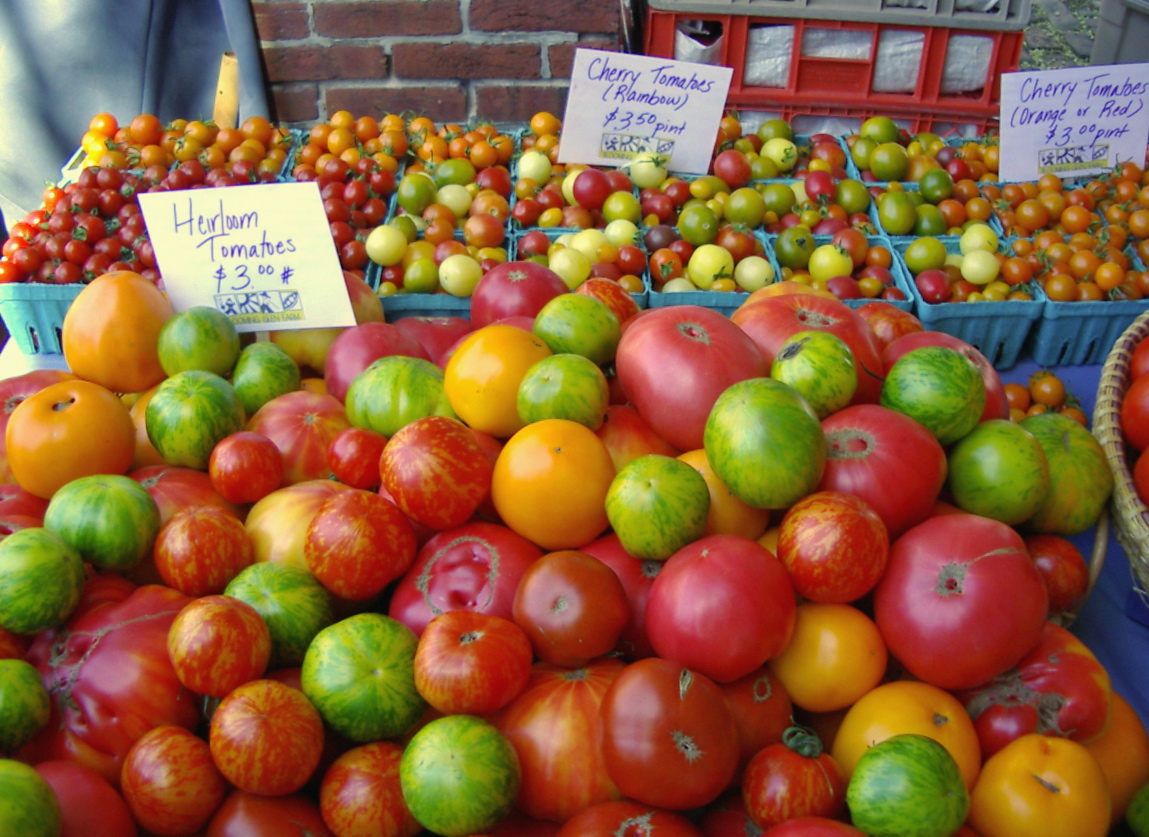
How About Them Tomatoes!
Tomatoes are so bountiful in August, and many people scratch their heads all month as one wine after another doesn't seem to pair quite well enough. Sauvignon blanc and chardonnay rarely do the trick, and most red wine just smothers the ripe and juicy tomato flavor. Do not fear. There are many yummy and widely available wines to wash down your favorite heirloom. As you can tell, tomatoes have an abundance of acid. The key is to seek wines that balance that acid with softness. Some are cheap....er....inexpensive and some will cost you a few days work, but all will change your experience with tomato/wine pairing and hopefully, make your August a little cooler.
- VIOGNIER: Say it with me now, (vee-oh-NYAY). This grape is indigenous to Northern Rhone in southern France. Examples from France are more delicate (and more expensive) than those from North America and Australia, which can almost exclusively be attributed to alcohol content. The wine viognier grapes make is typically round and fleshy, loaded with VERY ripe fruit, and low in acid. Dry, table wine viognier is almost always meant to be consumed young so don't fall for special "deals" on older bottles from your local wine shop. The equation for pairing is simple; light and delicate tomatoes should pair with French viognier, big and meaty varieties with U.S. and Australian bottles.
- GRUNER VELTLINER: I'll put it this way, if you're eating a savory fruit or vegetable and you can't find a decent wine to pair with it, get some gruner veltliner. "GruVe" is famous for its ability to match with hard to pair summertime favorites such as tomatoes, asparagus, and brussel sprouts. Almost all gruner is from Austria and much of what's on the market in the U.S. is quite inexpensive. This juice is dry (although tremendous late harvest gruner is made in small quantities) and wonderful for summertime drinking with just about anything.
- PINOT GRIS & PINOT BLANC: In this case, I quite specifically mean gris and blanc from Alsace, France. Pinot gris from Alsace is considerably different than Italian pinot grigio. Alsatian gris is bigger and softer, ripe, and lower in acid. Just about any wine shop or grocery store carries inexpensive bottles, but the best will set you back $50 and up. Pinot blanc from Alsace on the other hand is cheaper, lighter, and drier than gris. Although it's more difficult to find than gris, the delicacy of Alsatian pinot blanc is worth the effort. As with different examples of viognier, pair pinot blanc with lighter, sweeter tomatoes and pinot gris with more muscular tahmahtahs. *If you must buy pinot gris and blanc from North America, choose those from Oregon. However, pay attention to alcohol labeling and select bottles listed as 13.5% or lower.*
- ROSE: Really, any will do. My favorites for tomatoes are from southern France's Rhone Valley, Provence, and Languedoc, as well as those from Spain's Rioja region. American bottles can work well, but are again usually higher in alcohol. Choose those with 13.5% hooch or less for maximum gratification!
I'll let you get going now. There are a lot of tomatoes to eat and not a moment to spare. But now you can drink some wine with them that actually tastes good. What a revelation!
Salud!
Evan. portlandwino.
- VIOGNIER: Say it with me now, (vee-oh-NYAY). This grape is indigenous to Northern Rhone in southern France. Examples from France are more delicate (and more expensive) than those from North America and Australia, which can almost exclusively be attributed to alcohol content. The wine viognier grapes make is typically round and fleshy, loaded with VERY ripe fruit, and low in acid. Dry, table wine viognier is almost always meant to be consumed young so don't fall for special "deals" on older bottles from your local wine shop. The equation for pairing is simple; light and delicate tomatoes should pair with French viognier, big and meaty varieties with U.S. and Australian bottles.
- GRUNER VELTLINER: I'll put it this way, if you're eating a savory fruit or vegetable and you can't find a decent wine to pair with it, get some gruner veltliner. "GruVe" is famous for its ability to match with hard to pair summertime favorites such as tomatoes, asparagus, and brussel sprouts. Almost all gruner is from Austria and much of what's on the market in the U.S. is quite inexpensive. This juice is dry (although tremendous late harvest gruner is made in small quantities) and wonderful for summertime drinking with just about anything.
- PINOT GRIS & PINOT BLANC: In this case, I quite specifically mean gris and blanc from Alsace, France. Pinot gris from Alsace is considerably different than Italian pinot grigio. Alsatian gris is bigger and softer, ripe, and lower in acid. Just about any wine shop or grocery store carries inexpensive bottles, but the best will set you back $50 and up. Pinot blanc from Alsace on the other hand is cheaper, lighter, and drier than gris. Although it's more difficult to find than gris, the delicacy of Alsatian pinot blanc is worth the effort. As with different examples of viognier, pair pinot blanc with lighter, sweeter tomatoes and pinot gris with more muscular tahmahtahs. *If you must buy pinot gris and blanc from North America, choose those from Oregon. However, pay attention to alcohol labeling and select bottles listed as 13.5% or lower.*
- ROSE: Really, any will do. My favorites for tomatoes are from southern France's Rhone Valley, Provence, and Languedoc, as well as those from Spain's Rioja region. American bottles can work well, but are again usually higher in alcohol. Choose those with 13.5% hooch or less for maximum gratification!
I'll let you get going now. There are a lot of tomatoes to eat and not a moment to spare. But now you can drink some wine with them that actually tastes good. What a revelation!
Salud!
Evan. portlandwino.
August 3, 2008
Makin' Scores
The perceived importance of wine scores from publications such as Wine Spectator, The Wine Advocate, Wine Enthusiast, and many others has grown exponentially in recent years. Almost all reviewers and periodicals use a 100 point scale, with 100 points essentially being a "perfect" wine. For those who haven't seen a chart of how these scores break down, the following is the information listed in each and every issue of Wine Spectator.
95-100 Classic: a great wine
90-94 Outstanding: a wine of superior character and style
85-89 Very good: a wine with special qualities
80-84 Good: a solid, well-made wine
75-79 Mediocre: a drinkable wine that may have minor flaws
50-74 Not recommended
First off, ya'll can see that the 100 point scale is really a 50 point scale. Below 50 will apparently kill you on contact or at least make you immediately spit up, as Wine Spectator can't even list a definition for a score below fifty. Many (including me) would argue that it's really a 20 point scale as wines with a score below 80 are basically written off as crap without so much as a sip by the average consumer. Furthermore, you'll be hard pressed to find a shelf talker at any retail store advertising a score below 85, regardless of price. Second, the translation of these scales is often misguided as the definitions of the score ranges are misleading.
A wine scoring 95-100 points from any serious reviewer can be relied upon as technically sound, and more than likely, a great candidate for mid to long term cellaring. But that's the key, these wines are rarely in shape to be consumed on release or even within a year or two. Most "classic" scoring bottles are tight and under-developed, needing time in the cellar to mature and flourish. Many a wine drinker (including me) has been terribly disappointed by a young 97 point wine that was never meant to be opened so soon.
The range that most wine drinkers should try to hit is about 87-92. Bottles with these scores are generally ripe and ready for consumption. In fact, you can be assured that most producers who achieve scores in this range quite purposefully make their wine to be consumed young as most wine is purchased and opened on the same day.
Most importantly, be aware that scores are very rough guides. The idea that only wines with a score below 80 from Wine Spectator "may have minor flaws" is absurd. Many wines with scores above 85 have minor flaws, both technically and aesthetically. If you want to use scores as your guide when selecting at retail, sample wines that different reviewers and publications select and recommend. Identify those that most resemble your palate and taste, then use their scores more frequently or exclusively.
Remember, scores are only an outline. You can't drink a score, and a big score won't make a wine that you don't enjoy or appreciate any better.
Salud!
Evan. portlandwino.
95-100 Classic: a great wine
90-94 Outstanding: a wine of superior character and style
85-89 Very good: a wine with special qualities
80-84 Good: a solid, well-made wine
75-79 Mediocre: a drinkable wine that may have minor flaws
50-74 Not recommended
First off, ya'll can see that the 100 point scale is really a 50 point scale. Below 50 will apparently kill you on contact or at least make you immediately spit up, as Wine Spectator can't even list a definition for a score below fifty. Many (including me) would argue that it's really a 20 point scale as wines with a score below 80 are basically written off as crap without so much as a sip by the average consumer. Furthermore, you'll be hard pressed to find a shelf talker at any retail store advertising a score below 85, regardless of price. Second, the translation of these scales is often misguided as the definitions of the score ranges are misleading.
A wine scoring 95-100 points from any serious reviewer can be relied upon as technically sound, and more than likely, a great candidate for mid to long term cellaring. But that's the key, these wines are rarely in shape to be consumed on release or even within a year or two. Most "classic" scoring bottles are tight and under-developed, needing time in the cellar to mature and flourish. Many a wine drinker (including me) has been terribly disappointed by a young 97 point wine that was never meant to be opened so soon.
The range that most wine drinkers should try to hit is about 87-92. Bottles with these scores are generally ripe and ready for consumption. In fact, you can be assured that most producers who achieve scores in this range quite purposefully make their wine to be consumed young as most wine is purchased and opened on the same day.
Most importantly, be aware that scores are very rough guides. The idea that only wines with a score below 80 from Wine Spectator "may have minor flaws" is absurd. Many wines with scores above 85 have minor flaws, both technically and aesthetically. If you want to use scores as your guide when selecting at retail, sample wines that different reviewers and publications select and recommend. Identify those that most resemble your palate and taste, then use their scores more frequently or exclusively.
Remember, scores are only an outline. You can't drink a score, and a big score won't make a wine that you don't enjoy or appreciate any better.
Salud!
Evan. portlandwino.
Subscribe to:
Posts (Atom)